
Pregnancy-Related Pain Care in Adelaide
Understand your symptoms. Move with confidence. Stay active as your pregnancy changes.
Back pain, pelvic discomfort and changes in how you move can make pregnancy more demanding. At Live Better Be Stronger in Norwood, our osteopaths assess your symptoms and discuss care that may include hands-on treatment, practical advice and tailored exercise.
We adapt your care to your stage of pregnancy, medical history, comfort and goals, alongside the care you receive from your midwife, GP or obstetrician.
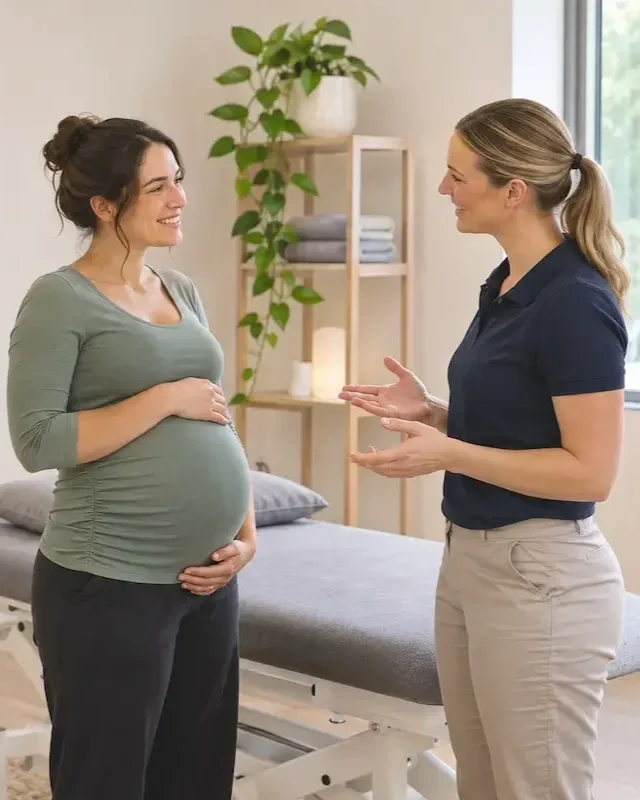
Pregnancy-related pain care built around you
Sleeping more comfortably. Walking to the shops. Getting through work. Picking up your toddler. Continuing the exercise you enjoy.
Your priorities shape your care. We take time to understand what has changed, explain what the assessment suggests and agree on practical next steps.
Depending on your presentation, care may combine hands-on treatment, changes to daily activities and an achievable exercise programme. We review your response and adjust the plan as your needs change.
If your symptoms need maternity assessment, medical investigation or pelvic health support, we will explain why and recommend an appropriate referral.
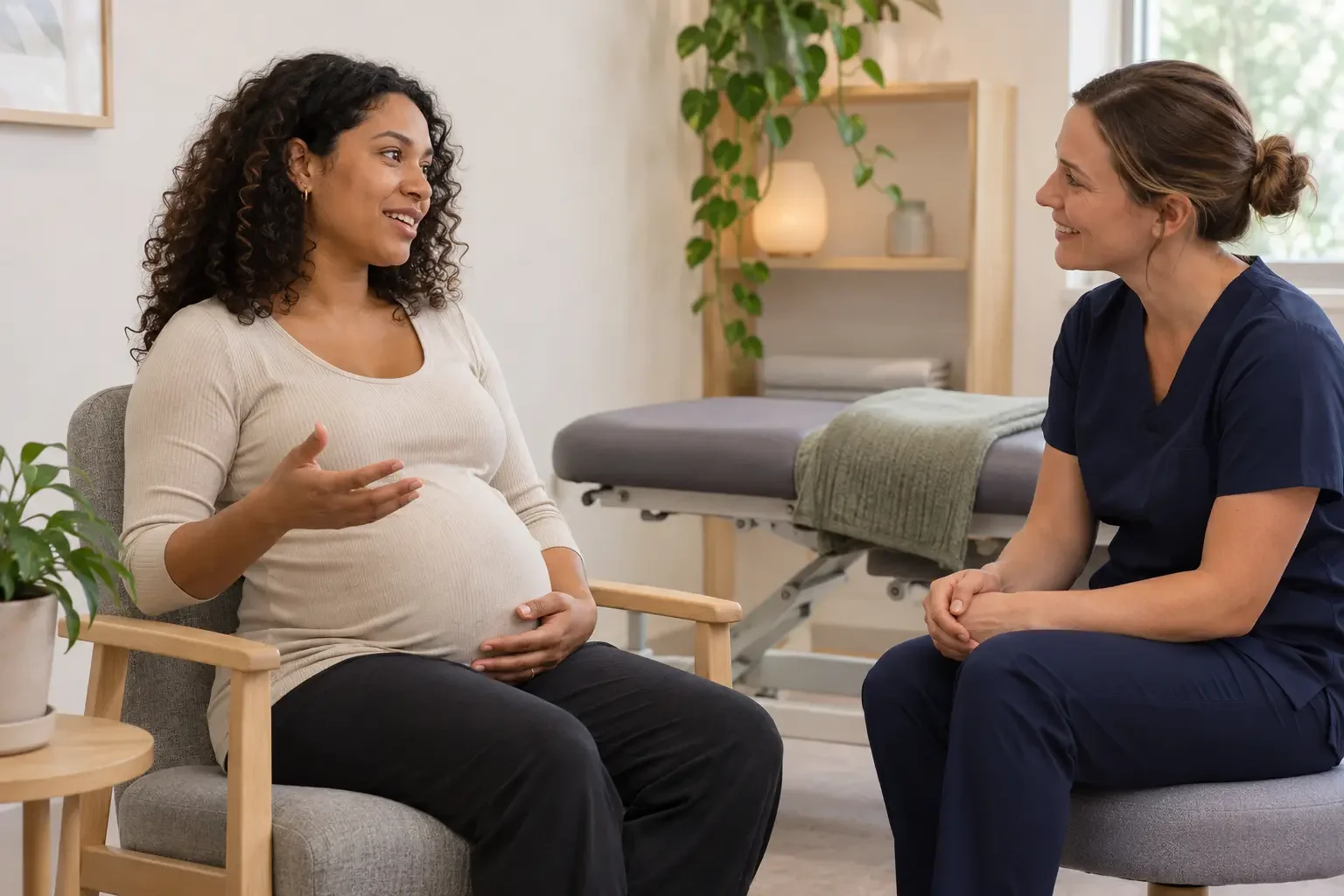
Understanding pregnancy-related musculoskeletal pain
Back and pelvic pain are common during pregnancy. Changes in your body and the demands of daily activities can affect how comfortable movement feels. Symptoms deserve assessment rather than being dismissed as something you simply have to tolerate. [1,2]
Pelvic girdle pain describes pain around the front or back of the pelvis, sometimes extending into the hips or thighs. Walking, stairs and turning in bed can become uncomfortable. It can overlap with lower-back pain, but the terms are not interchangeable. [1,2]
Pain location alone does not establish the cause. We consider your symptoms, pregnancy history and examination, including whether a non-musculoskeletal problem needs medical assessment.
How we assess your pregnancy-related pain
We begin with your history, concerns and the activities that matter to you. Your assessment may include:
Discussing your stage of pregnancy, relevant medical history and any advice from your maternity team.
Asking how symptoms started and whether they affect sleep, walking, work or exercise.
Assessing back, hip and pelvic movement where appropriate.
Observing relevant activities, such as walking, getting out of a chair or stepping.
Checking sensation and muscle strength if you have leg or hand symptoms.
Screening for warning signs and deciding whether you need a referral.
We adapt examination positions to your comfort and stage of pregnancy. You can ask questions, decline a test or pause the assessment at any time.
Before treatment, we explain what we think is happening, what remains uncertain and your options. With your consent, we can communicate with your other healthcare providers.
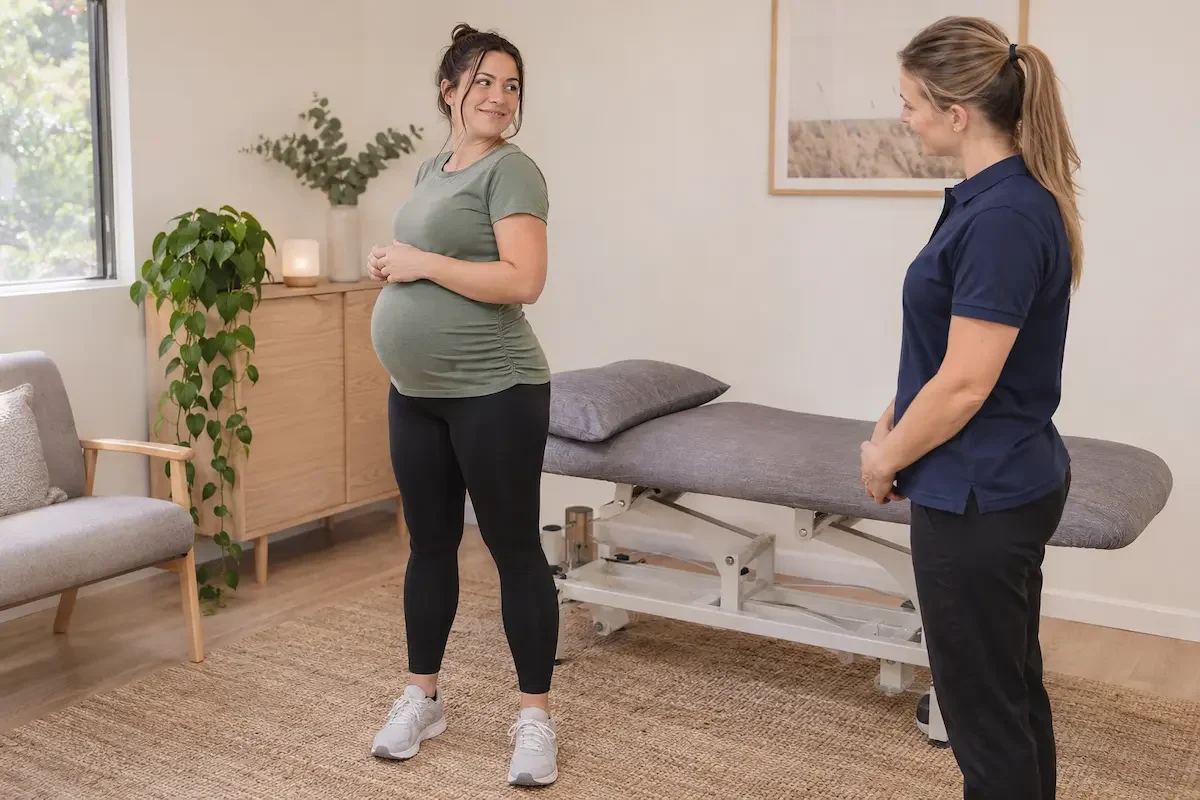
Our approach: Reset. Retrain. Reload.
The three Rs describe how we organise care. They overlap and change with your needs; you don’t have to complete one stage before starting another.

Reset — Settle symptoms and find comfortable options
We explore ways to make your current symptoms more manageable. This may include soft-tissue treatment, gentle joint mobilisation, supported positions and practical adjustments to activities that are uncomfortable.
Hands-on care is optional. We discuss the proposed techniques, likely benefits, relevant risks and alternatives, and adapt treatment to your pregnancy and preferences.
Treatment focuses on your comfort and function. It is not intended to reposition your baby or prepare your pelvis for a particular type of birth.

Retrain — Practise the movements that matter
We help you explore manageable ways to move during daily life.
Your plan might include practising getting out of a chair, adjusting how you turn in bed, or choosing suitable movement and strengthening exercises. We consider your symptoms, confidence, previous exercise experience and maternity advice.
The aim is a routine you understand and can use, with adjustments when something is not working for you.
Reload — Maintain strength and capacity
Pregnancy does not automatically mean stopping exercise. Where appropriate, we help you maintain or gradually build capacity for walking, work, family life and training. [3,4]
Your programme may include suitable resistance exercise and aerobic activity, with changes to position, resistance, duration and recovery as needed.
Progress is individual. Sometimes the right adjustment is to reduce a demand or maintain your current capacity while your pregnancy progresses.
Common presentations and diagnoses
These descriptions explain some common patterns. They overlap and do not replace an individual assessment.
-
Lower-back aching or stiffness can develop during pregnancy and affect sleep or everyday activity. [5]
We assess the pattern of symptoms and discuss appropriate activity adjustments, exercise and whether hands-on care is a reasonable option. New, severe or unusual back pain needs medical review, particularly with other warning signs.
-
Pelvic girdle pain can affect the back of the pelvis, the pubic region or both. Walking, stairs and activities on one leg may be particularly uncomfortable. [1,2]
Management may involve activity advice, tailored exercise and discussion of whether a pelvic support belt or referral would be useful. NICE recommends considering physiotherapy referral for exercise advice and/or a non-rigid lumbopelvic belt. [6]
-
Pain at the front of the pelvis may be described as pubic symphysis pain or symphysis pubis dysfunction (SPD). SPD is an older term commonly used in relation to pelvic girdle pain. [1]
We assess your symptoms and movement tolerance before discussing ways to manage relevant daily activities. Severe pain or marked difficulty walking needs prompt review.
-
Pelvic girdle pain can extend into the hips, groin or thighs. However, symptoms in these areas can also have other causes. [1]
We assess rather than assume that every new symptom is a routine pregnancy change. Sudden or severe pain, inability to bear weight or associated abdominal symptoms warrants medical assessment.
-
Sciatica can involve pain into the buttock and leg, sometimes with tingling, numbness or weakness. Not all buttock or leg pain is sciatica. [7]
Assessment helps identify possible nerve involvement and whether medical review is needed. New or worsening weakness requires prompt assessment; bladder, bowel or saddle-sensation changes require emergency care. [7]
-
Fluid retention during pregnancy can contribute to pressure on the median nerve at the wrist. Symptoms may include hand tingling, numbness, pain or reduced grip, often worse at night. [8]
We can discuss activity adjustments and whether a wrist splint or medical review would be appropriate. Persistent numbness or weakness needs assessment. [8]
What does the research say?
Research helps guide how we combine exercise, hands-on care and practical advice. The findings depend on the symptoms being treated, the people studied and what the treatment was compared with.
Exercise during pregnancy
For healthy women with uncomplicated pregnancies, Australian guidance recommends 150–300 minutes of moderate-intensity activity each week, with muscle strengthening on at least two days. A guideline published in the British Journal of Sports Medicine also supports combining aerobic and resistance exercise during pregnancy for women without contraindications. [3,17]
Walking, swimming, stationary cycling and suitable resistance exercise are options. If you are currently inactive, start with manageable amounts and build gradually.
These recommendations support general health. Your exercise programme should also account for your symptoms, previous activity and any advice from your maternity team. Pregnancy complications or medical restrictions require individual guidance.
Exercise for back and pelvic pain
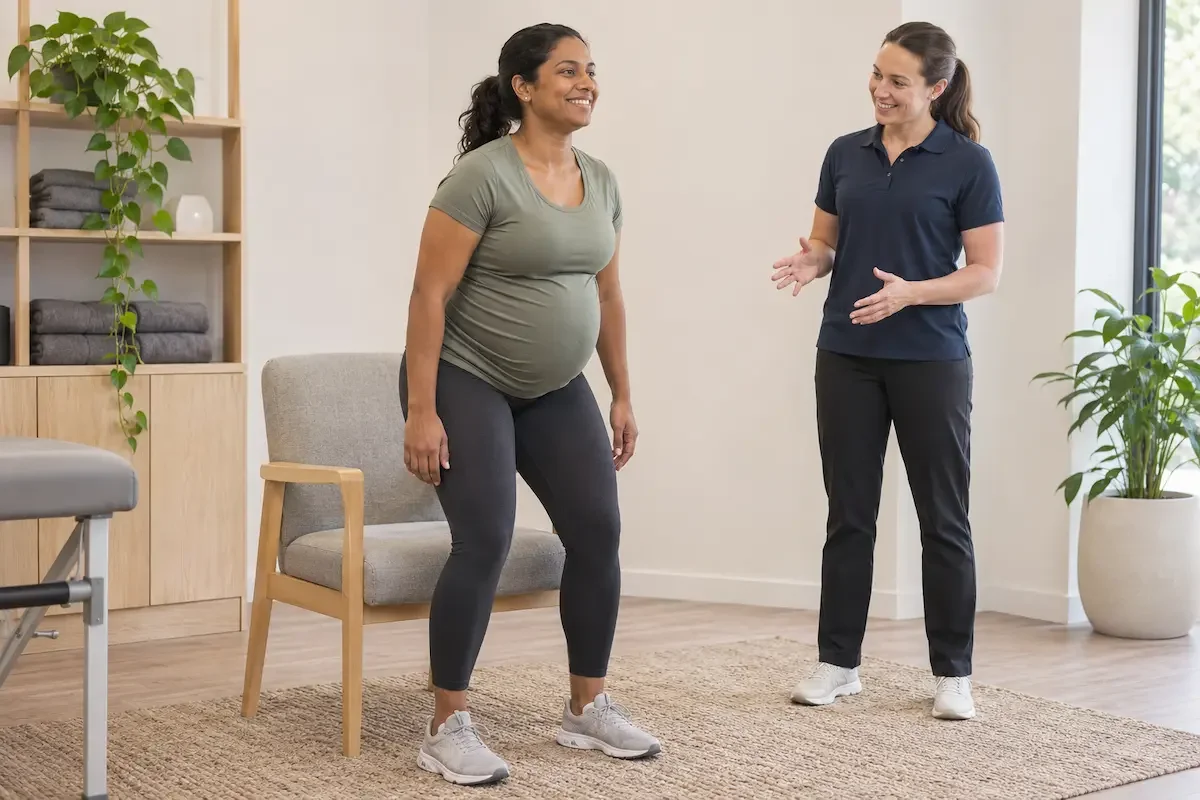
A systematic review by Davenport and colleagues found that exercise during pregnancy reduced the severity of lower-back, pelvic girdle or combined pain on average, without clearly reducing the likelihood of developing these conditions. Evidence quality ranged from very low to moderate. [9]
A 2026 systematic review by Lu and colleagues included 11 randomised trials involving 810 participants with pregnancy-related pelvic girdle pain. Exercise improved pain and function on average, with moderate certainty, although results varied between studies. [14]
These findings support offering suitable exercise and adjusting it to your symptoms, current ability and goals. They do not establish one ideal routine for everyone.
Hands-on treatment during pregnancy
A systematic review by Franke and colleagues reported improvements in pain and function with osteopathic treatment during pregnancy. The authors rated the pregnancy evidence as moderate quality, while calling for larger trials with stronger comparison groups. [12]
The PROMOTE trial studied 400 women in their third trimester. Osteopathic treatment helped limit worsening pain and disability compared with usual care alone, but was not significantly better than the placebo ultrasound comparison. [10]
A broader review by Hall and colleagues similarly found benefits from manual therapies compared with usual care, but no clear advantage over sham treatment. A 2026 scoping review described possible short-term benefits while highlighting small studies, varied methods and uncertain effects. [13,15]
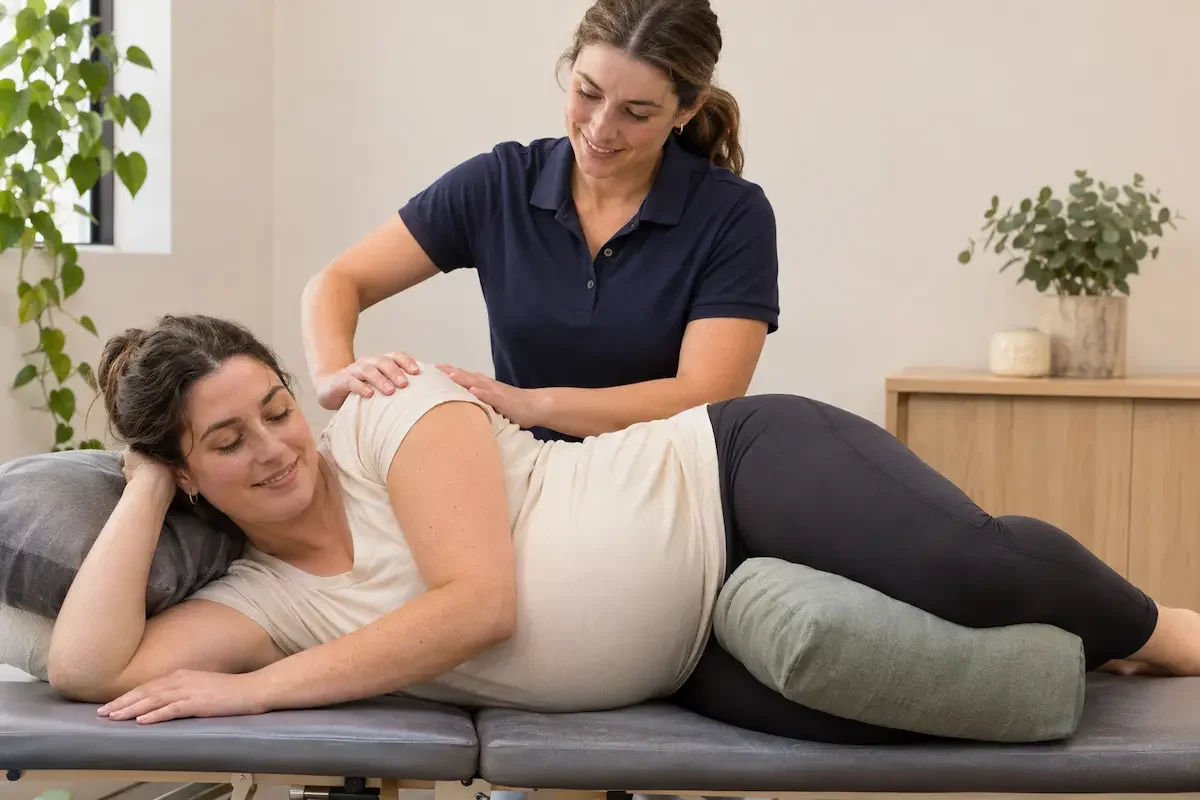
Hands-on care may be considered for symptom management. We discuss suitable options and review whether treatment is helping your comfort, movement and daily activities.
Advice, support belts and coordinated care
A randomised trial by Kordi and colleagues found short-term improvements in pain and disability with a non-rigid lumbopelvic belt plus information compared with the other groups studied. [16]
NICE also recommends considering physiotherapy referral for exercise advice and/or a non-rigid lumbopelvic belt for pregnancy-related pelvic girdle pain. [6]
A belt may be an option when daily activities are difficult. It is not necessary for everyone, and it does not replace assessment or an individual management plan.
At LBBS, we combine research with your assessment, preferences and response to care. The balance of advice, hands-on treatment and exercise may change as your pregnancy progresses. We can also recommend pelvic health physiotherapy or medical review where additional support is appropriate.
When to seek medical help
Some symptoms need medical assessment rather than a routine osteopathy appointment.
Seek emergency assessment now
Call 000 for a potentially life-threatening emergency, including severe chest pain, severe breathing difficulty, collapse or heavy bleeding with faintness.
Back or leg pain with new difficulty passing urine, loss of bladder or bowel control, numbness around the genitals or anus, or severe or worsening weakness in both legs needs emergency hospital assessment. Do not wait for an osteopathy appointment. [7]
Arrange prompt medical review
Seek medical advice for worsening pain, substantial difficulty walking, new weakness, persistent numbness, or back pain with painful urination. [5,7,8]
This list is not exhaustive. If something feels wrong or you are concerned about your pregnancy, contact your maternity team.
Contact your maternity team immediately
Contact your midwife, maternity assessment unit, GP or obstetrician immediately for:
Vaginal bleeding or fluid leaking from the vagina.
Severe or persistent abdominal pain.
Regular painful contractions, particularly before 37 weeks.
Reduced or changed baby movements.
A severe or persistent headache, visual changes or sudden swelling.
Fever, chills, or feeling significantly unwell.
Pain or swelling in one leg.
A fall, accident or blow to your abdomen. [4,11]
Early pregnancy pain at the tip of the shoulder, particularly with abdominal pain, bleeding, dizziness or fainting, also needs urgent medical assessment. [11]
Frequently Asked Questions
-
You can book an assessment for musculoskeletal symptoms during pregnancy. Whether treatment is appropriate depends on your symptoms, medical history, stage of pregnancy and any complications.
We discuss suitable options and refer when maternity assessment or another service is the better next step.
-
There is no blanket safety guarantee for every technique or pregnancy. We assess suitability, explain relevant risks and alternatives, and adapt treatment and positioning.
You can decline any technique. If there are concerns about your pregnancy or symptoms, medical advice may be needed before proceeding.
-
This depends on your symptoms and diagnosis. We can help you decide which activities to continue, modify or temporarily pause.
Adjustments might involve changing the weight, range of movement, repetition count or time spent on a task. Advice is tailored to your assessment, particularly if there has been a recent injury or you have nerve symptoms.
-
No. We can use positions such as side-lying or supported sitting, depending on your comfort and what is being assessed or treated.
Tell us if a position makes you dizzy, breathless, nauseated or uncomfortable so we can stop and adjust.
-
Often, activity can be adjusted rather than stopped entirely. With pelvic girdle pain, changing the type or amount of activity may help you remain active without repeatedly aggravating symptoms. [2]
Stop exercising and seek medical advice for warning signs such as bleeding, dizziness, chest pain, calf pain or swelling, leaking fluid or regular painful contractions. [4]
-
The evidence cited on this page does not establish that osteopathy shortens labour, prevents caesarean birth or turns a breech baby.
Our care focuses on your musculoskeletal symptoms and daily function. Questions about your baby’s position, labour or birth planning belong with your midwife or obstetrician.
-
That may be useful, particularly for pelvic floor symptoms, bladder or bowel concerns, or pregnancy-related pelvic girdle pain needing additional support. NICE specifically recommends considering physiotherapy referral for pelvic girdle pain. [6]
We can discuss referral and coordinate care with your consent.
-
That depends on your presentation, priorities and response. We discuss a proposed plan after assessment and review whether further appointments remain useful.
There is no compulsory schedule of treatment throughout pregnancy.
Support for a more comfortable, active pregnancy
If back, pelvic, or joint symptoms affect your daily life, book an assessment to understand your options.
Dr Rosalind Hill’s clinical interests include pregnancy-related and postnatal musculoskeletal care. You can view practitioner availability through our booking page.
References
Royal College of Obstetricians and Gynaecologists. Pelvic girdle pain and pregnancy.
NHS. Pelvic pain in pregnancy.
Australian Government Department of Health, Disability and Ageing. Recommendations for pregnancy. Updated March 2026.
American College of Obstetricians and Gynecologists. Exercise During Pregnancy. FAQ119. Updated September 2024.
NHS. Back pain in pregnancy.
NICE. Antenatal care: NG201. Recommendation 1.4.15 and rationale on pelvic girdle pain.
NHS. Sciatica.
Whittington Health NHS Trust. Carpal tunnel syndrome in pregnancy.
Davenport MH, et al. Exercise for the prevention and treatment of low back, pelvic girdle and lumbopelvic pain during pregnancy: a systematic review and meta-analysis. British Journal of Sports Medicine. 2019;53(2):90–98.
Hensel KL, et al. Pregnancy Research on Osteopathic Manipulation Optimizing Treatment Effects: the PROMOTE study. American Journal of Obstetrics and Gynecology. 2015;212(1):108.e1–9.
Healthdirect Australia. Warning signs during pregnancy.
Franke H, Franke JD, Belz S, Fryer G. Osteopathic manipulative treatment for low back and pelvic girdle pain during and after pregnancy: A systematic review and meta-analysis. Journal of Bodywork and Movement Therapies. 2017;21(4):752–762. doi:10.1016/j.jbmt.2017.05.014. View article.
Hall H, et al. The effectiveness of complementary manual therapies for pregnancy-related back and pelvic pain: A systematic review with meta-analysis. Medicine. 2016;95(38):e4723. doi:10.1097/MD.0000000000004723. Read article.
Lu X, et al. Exploring exercise prescription parameters for pregnancy-related pelvic girdle pain: A systematic review and meta-analysis of effects on pain and function. The Journal of Pain. 2026;47:106401. doi:10.1016/j.jpain.2026.106401. View article.
Juneja H, et al. Manual therapy treatments in the management of pregnancy related pelvic girdle pain: a scoping review. Journal of Manual & Manipulative Therapy. Published online 29 September 2026. doi:10.1080/10669817.2026.2733479. View article.
Kordi R, et al. Comparison between the effect of lumbopelvic belt and home based pelvic stabilizing exercise on pregnant women with pelvic girdle pain; a randomized controlled trial. Journal of Back and Musculoskeletal Rehabilitation. 2013;26(2):133–139. doi:10.3233/BMR-2012-00357. View article.
Mottola MF, et al. 2019 Canadian guideline for physical activity throughout pregnancy. British Journal of Sports Medicine. 2018;52(21):1339–1346. doi:10.1136/bjsports-2018-100056. View article.
This information is general and does not replace an individual assessment. Management options depend on your symptoms, medical history and examination.