
Neck Pain Treatment in Adelaide
Understand your pain. Move with confidence. Get back to what matters.
Our osteopaths in Norwood assess neck pain and help you understand your options. Care may include education, hands-on treatment and exercise, guided by your symptoms, preferences and goals.
Neck pain care built around you
Turning your head while driving. Getting through a working day. Sleeping comfortably. Returning to the gym.
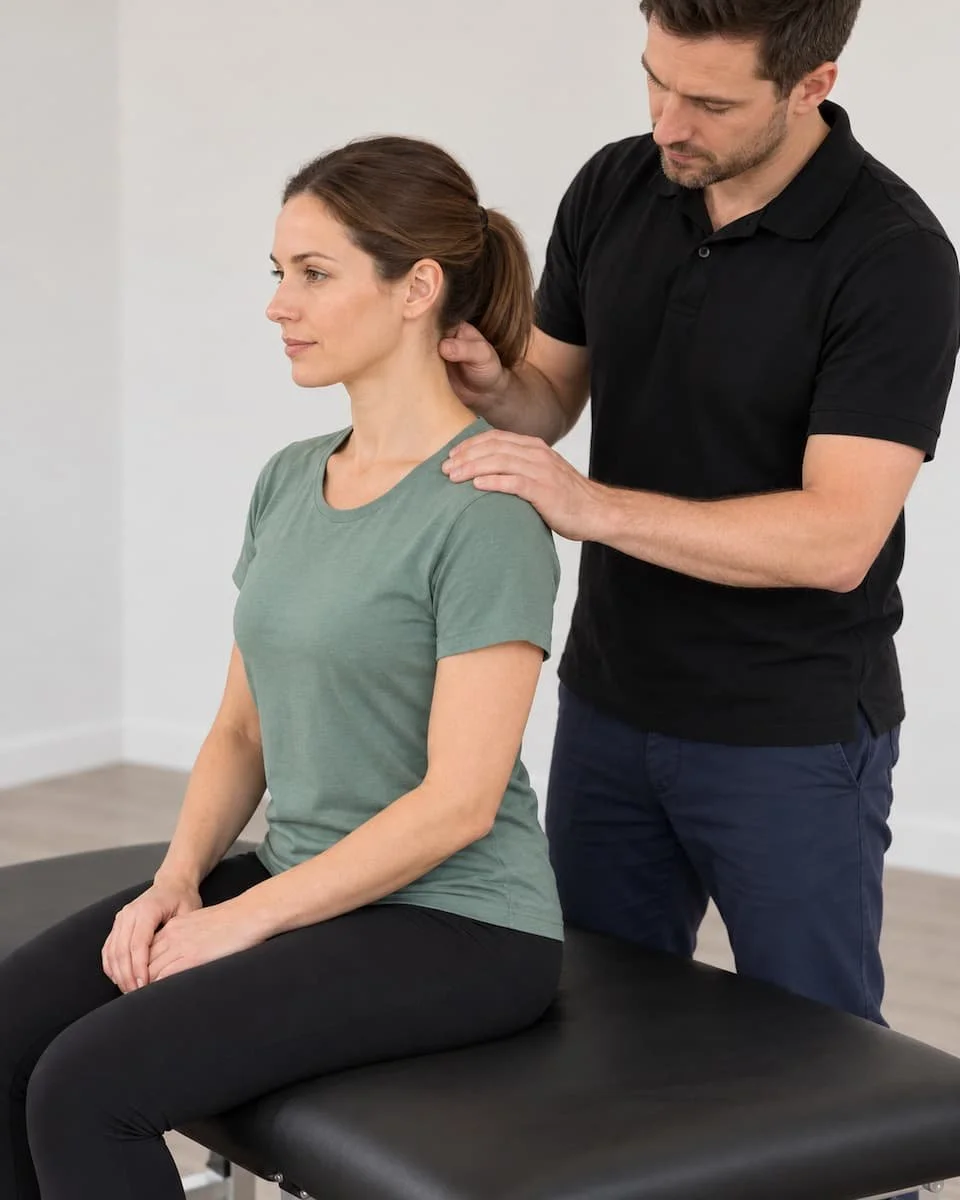
Neck pain can make ordinary tasks frustrating. At Live Better Be Stronger, we start with what is difficult for you and what you want to get back to.
Your appointment includes time to discuss your symptoms, assess your movement and explain the findings. Together, we build a plan that fits your daily life, with practical steps you can use between appointments.
We aim to help you understand your neck pain, make informed decisions and become more confident managing it.
Understanding neck pain
Neck pain can involve aching, stiffness or difficulty turning your head. Symptoms may also extend towards the shoulders, upper back or head. Pain travelling into an arm, particularly with tingling, numbness or weakness, needs assessment for possible nerve involvement. [1,9]
Often, there is no single structure that explains every symptom. Muscles, joints, activity demands and individual health factors can all contribute. An assessment helps distinguish common neck pain from problems needing medical investigation. [1,2]
Terms such as “disc degeneration” or “cervical spondylosis” describe changes that become more common with age. They can occur without pain, so a scan needs to be interpreted alongside your symptoms and examination. [8]
How we assess your neck pain
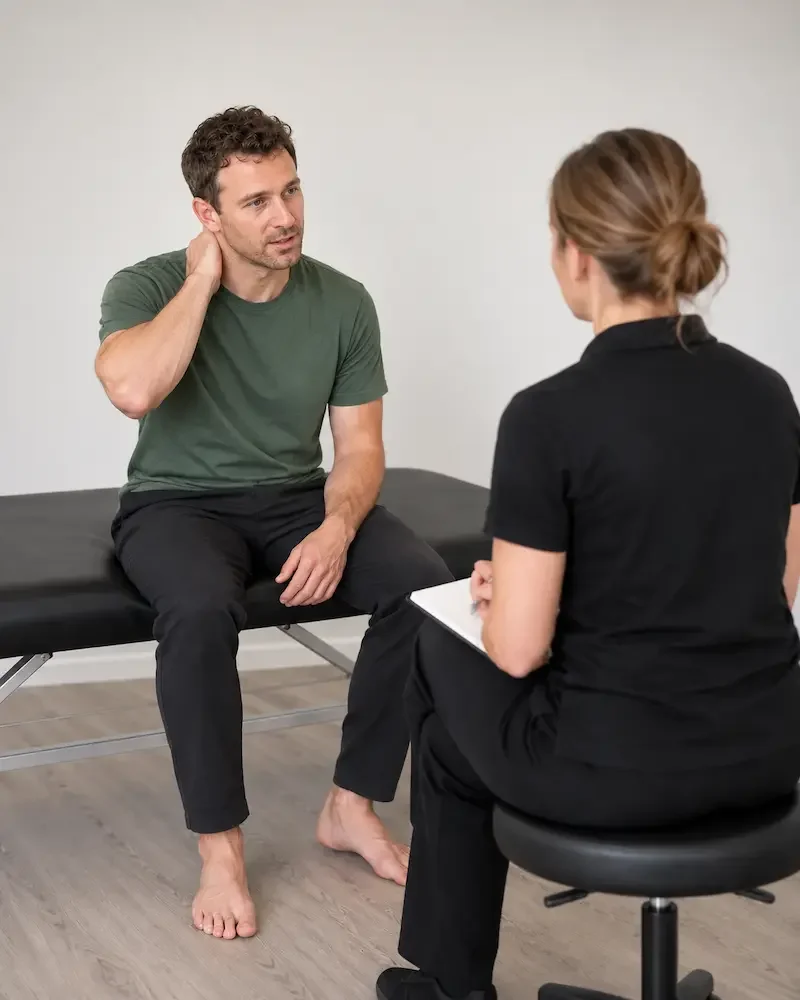
We begin by listening: when your symptoms started, what changes them and how they affect your day.
Depending on your presentation, your assessment may include:
Neck, shoulder and upper-back movement.
Strength and tolerance for relevant activities.
Sensation, reflexes and muscle strength when nerve involvement is suspected.
Questions about headaches, dizziness, injuries and general health.
Discussion of work, training, sleep and your priorities.
We explain what we find, what remains uncertain and whether osteopathic care is appropriate. Some symptoms require GP review, imaging or specialist assessment before treatment. [3,11]
You do not routinely need a scan before an appointment. Imaging is considered when the history or examination suggests it could change your management. [2]
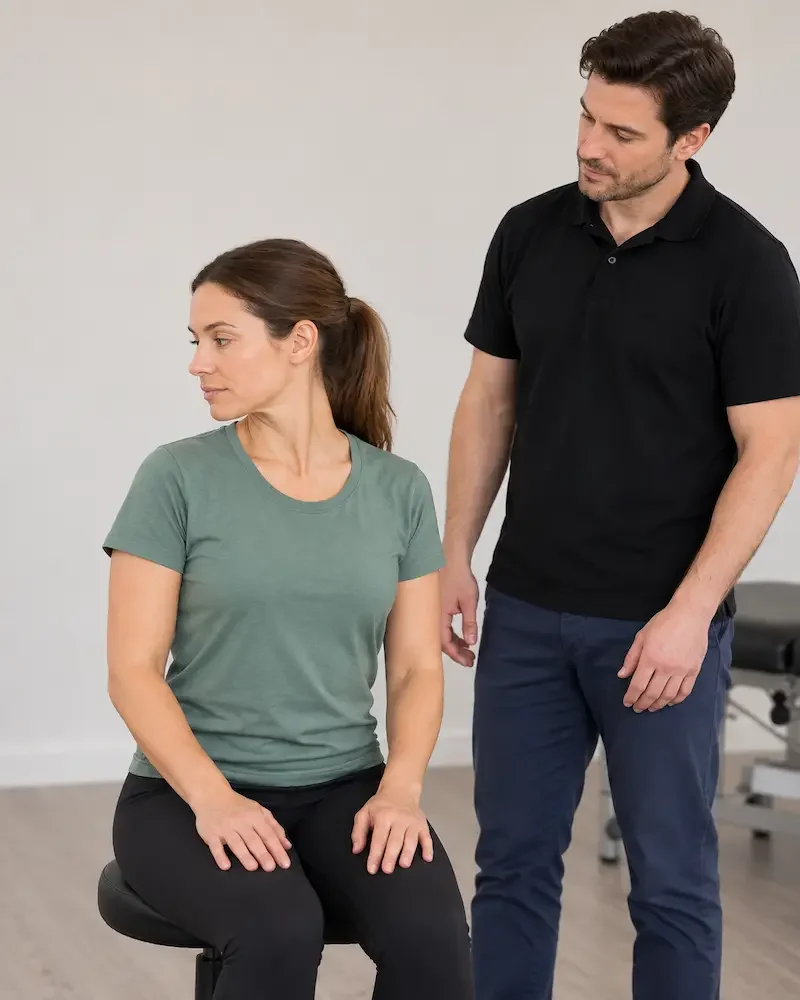
Reset — Settle symptoms and support movement.
We use appropriate hands-on care to help manage symptoms and support more comfortable movement. This may include soft-tissue techniques and joint mobilisation, guided by your assessment and preferences.
We explain the proposed treatment and discuss relevant benefits, risks and alternatives. Advice and comfortable movement can begin alongside hands-on care.
Our approach: Reset. Retrain. Reload.
Our three Rs give your care a practical direction. They are a flexible framework, rather than a fixed sequence or a requirement to complete a set number of appointments.
Retrain — Build movement control and confidence.
We choose exercises around your assessment and goals. These might involve turning your head, building neck and shoulder endurance or becoming more comfortable with movements you have been avoiding.
The aim is a manageable routine that you understand and can practise consistently.
Reload — Build strength and capacity.
As your tolerance improves, we can progress strength, endurance and activity demands.
That might mean longer periods at work, lifting and carrying, returning to the gym or preparing for sport. Progression is based on your response and function, and we adjust the plan as needed.
Common presentations and diagnoses
Neck pain can present in different ways. These descriptions explain some common patterns; an assessment helps determine which are relevant to you.
-
This describes neck pain without an identified serious cause or a single structure that clearly explains the symptoms. The pain is real, even when a precise tissue diagnosis is not possible.
Care may include explanation, appropriate activity and exercise. Hands-on treatment can be considered according to your presentation and preferences. [2,3]
-
Symptoms can begin after unfamiliar exercise, lifting, prolonged activity or an awkward movement. Soreness alone does not tell us exactly which tissue is involved.
We assess your movement and activity tolerance, then discuss temporary adjustments and a gradual return to your usual demands. [1,3]
-
Long periods working at a screen can be uncomfortable, particularly when there is little opportunity to change position.
We consider your work demands, movement breaks and exercise capacity. Research suggests neck and shoulder strengthening may help office workers with persistent neck pain, although confidence in the evidence is low. [6]
-
Irritation of a nerve in the neck can cause arm pain, tingling, numbness or weakness. Disc changes are one possible contributor. The term cervical radiculopathy describes a problem affecting a cervical nerve root.
Assessment includes checking neurological function. Appropriate care may involve advice and tailored exercise, with medical referral where needed. New or worsening weakness needs prompt medical assessment. [9]
-
Cervical spondylosis describes age-related changes in the neck’s discs and joints. These changes are common and do not always cause symptoms.
Management focuses on your symptoms and function. We may discuss movement, exercise and activity adjustments; hands-on treatment does not reverse degeneration or restore discs. [8]
-
Whiplash can follow a sudden acceleration and deceleration of the head, commonly during a vehicle collision. An initial assessment is important to identify injuries requiring medical care.
Once serious injury has been excluded, Australian guidance supports reassurance, remaining active and neck exercises. We can help plan a gradual return to daily activities and monitor your progress. [7]
-
Some headaches arise from the neck and are described as cervicogenic headaches. However, having neck pain alongside a headache does not automatically establish that diagnosis.
For appropriately assessed cervicogenic headache, exercise and some manual therapies may help. The evidence has limitations, and other headache types may need different management. [10]
-
Pain lasting more than three months, or repeatedly returning, deserves a review of the wider picture.
We consider activity tolerance, previous treatment, sleep, work demands and your goals. Care may include progressive exercise and practical self-management strategies, with review or referral if symptoms are not following the expected course. [2,3,4]

What does the research say?
Research informs how we combine hands-on care, exercise and advice for neck pain. Clinical guidelines include combinations of manual therapy and exercise for selected neck-pain presentations, with treatment adapted to the person and their symptoms. [3]
At LBBS, we use these approaches to address both your current difficulties and the activities you want to return to.
Remaining active and understanding your pain
Guidance for non-specific neck pain supports education, self-management and appropriate activity. This means finding manageable ways to keep moving, with temporary adjustments where needed. [2,3]
We explain the assessment findings and help you decide how to approach work, sleep, exercise and everyday tasks.
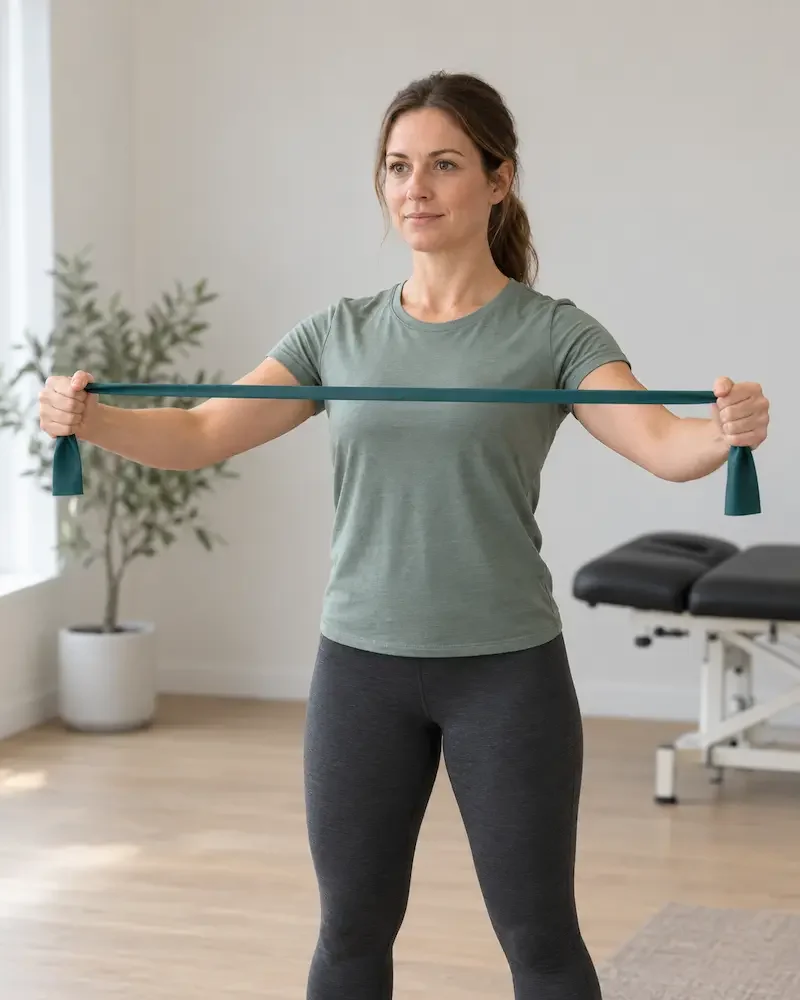
Exercise for persistent neck pain
Research supports strengthening and endurance exercises for the neck, shoulders and upper back in some people with persistent neck pain. Results vary with the programme and the people studied. [4]
Your exercises should have a clear purpose and fit your current ability. We can progress movement, strength and endurance as your tolerance improves.
Hands-on treatment alongside exercise
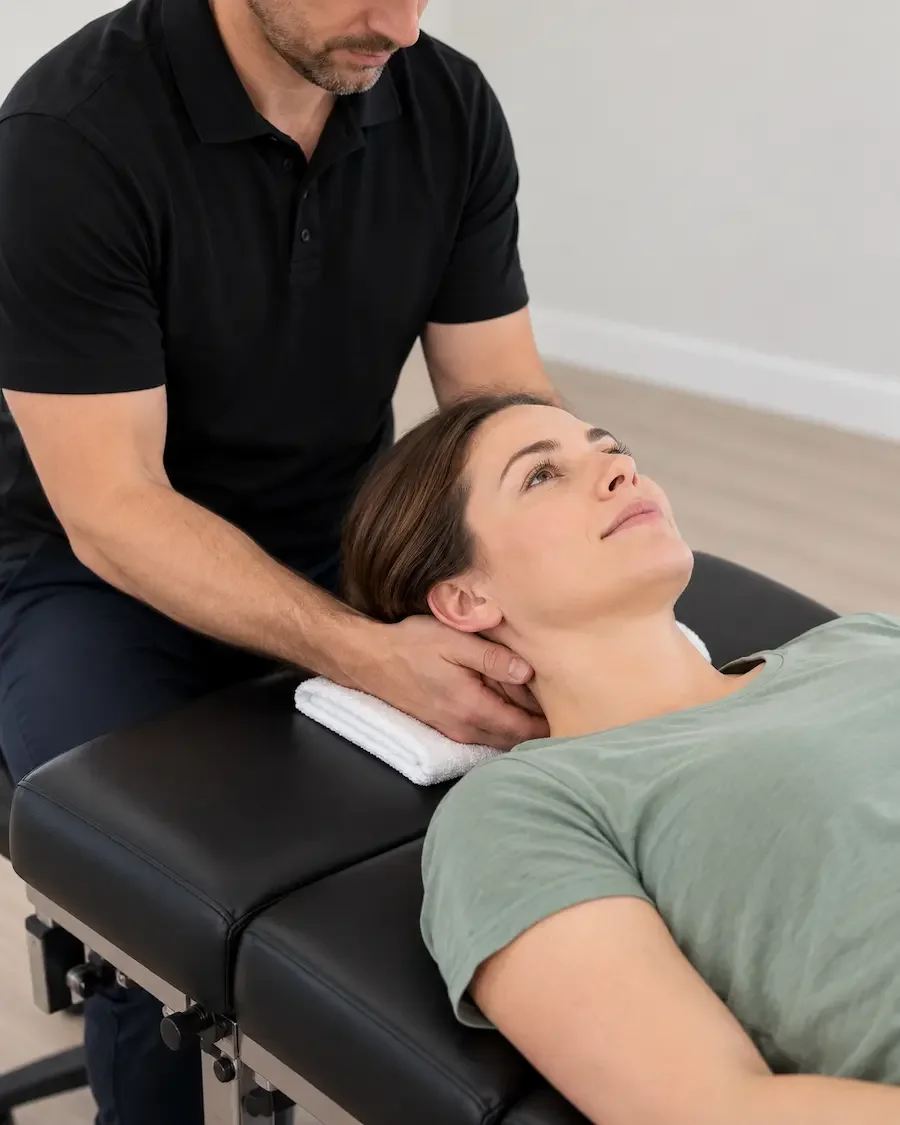
Hands-on treatment can be included alongside exercise to help manage neck pain and difficulty with daily activities. Depending on your assessment and preferences, this may involve soft-tissue techniques, joint mobilisation or other appropriate manual techniques. [3,5]
A 2025 Cochrane review found that manual therapy combined with exercise may improve pain and function compared with no treatment. Compared with sham treatment, it may improve function, while the difference in pain was small or absent. Confidence in the evidence was generally low. [5]
This supports a measured approach: hands-on care is an option worth discussing, with its value reviewed against your symptoms and progress. Neck manipulation is optional; we discuss the benefits, risks and alternatives before treatment.
Bringing treatment and rehabilitation together
At LBBS, hands-on care is part of the treatment we offer, alongside movement practice, exercise and practical advice.
We agree on the balance with you and review it as your needs change. The aim is to help with current symptoms while building confidence and capacity for work, daily life and training.
Different presentations need different plans. Research on persistent non-specific neck pain does not automatically apply to whiplash, nerve-related arm symptoms or every type of headache.
When to seek medical help
Some symptoms need medical assessment rather than a routine osteopathy appointment.
Seek emergency assessment now
Call 000 or attend an emergency department for:
A sudden, severe or unusual headache, particularly with neck pain.
Neck pain or headache with new facial drooping, difficulty speaking, double vision, collapse or sudden weakness.
Fever with severe headache, marked neck stiffness, confusion or feeling seriously unwell.
Significant neck injury with severe pain, weakness or altered sensation.
New difficulty walking, sudden loss of coordination or loss of bladder or bowel control.
Do not wait for a clinic appointment if these symptoms occur. [1,8,11,12]
Arrange prompt medical review
Seek medical advice for new or worsening arm weakness, persistent numbness, increasing hand clumsiness or balance changes.
Neck pain with unexplained weight loss, a history of cancer, or persistent pain that is worsening also needs medical review. [1,8,9]
If you are unsure what care you need, call healthdirect on 1800 022 222. In an emergency, call 000.
Frequently Asked Questions
-
Usually not. For uncomplicated neck pain, assessment generally begins with your history and a physical examination.
Scans may be appropriate after certain injuries, with concerning neurological findings or when the result could change your care. If you already have relevant imaging, bring the report. [2,3]
-
No. Neck manipulation is optional.
We can discuss other approaches, including exercise, advice, soft-tissue techniques and gentle joint mobilisation. If manipulation is considered, we explain the potential benefits, relevant risks and alternatives before seeking your consent. You can decline any technique. [11]
-
Often, some activity can continue with adjustments. The appropriate type and amount depend on your symptoms and assessment.
You may need to temporarily modify movements, resistance or duration. New weakness, increasing numbness, unusual headache or balance symptoms need assessment rather than exercising through them. [3,9]
-
There is no preset course. We discuss a plan after assessment and review it against your goals and response. If care is not helping, we will reconsider the approach and whether another service is more appropriate.
-
Both Dr Rosalind Hill and Dr Joshua Saxton provide general musculoskeletal osteopathic care. Josh is also an Accredited Exercise Physiologist.
Visit our practitioner profiles and booking page to check availability. Contact us if you are unsure who to book with.
Neck pain appointments in Norwood
If neck pain is affecting your work, sleep or training, an assessment can help you understand your symptoms and discuss your next steps.
Book with an LBBS osteopath in Norwood for care guided by your presentation, preferences and goals.
References and further reading
Healthdirect Australia. Neck pain: treatments, causes and related symptoms.
El-Allawy A, et al. (2025). Clinical Practice Guideline: Nonspecific Neck Pain.
Blanpied PR, et al. (2017). Neck Pain: Revision 2017. Journal of Orthopaedic & Sports Physical Therapy.
Gross A, et al. (2015). Exercises for mechanical neck disorders. Cochrane Database of Systematic Reviews.
Chacko N, et al. (2025). Manual therapy with exercise for neck pain. Cochrane Database of Systematic Reviews.
Broady Jones L, Jadhakhan F, Falla D. (2024). The influence of exercise on pain, disability and quality of life in office workers with chronic neck pain: a systematic review and meta-analysis. Applied Ergonomics.
State Insurance Regulatory Authority, NSW. Quick reference guide for the management of whiplash-associated disorders.
NHS inform. Cervical radiculopathy.
Bini P, et al. (2022). The effectiveness of manual and exercise therapy on headache intensity and frequency among patients with cervicogenic headache: a systematic review and meta-analysis. Chiropractic & Manual Therapies.
International IFOMPT Cervical Framework. International Framework for Examination of the Cervical Region for Potential of Vascular Pathologies of the Neck Prior to Musculoskeletal Intervention.
Healthdirect Australia. Headaches: types, causes, treatment and prevention.
This page provides general information and does not replace an individual assessment.