
Shoulder and Arm Pain Treatment in Adelaide
Understand your symptoms. Move with confidence. Build strength for what matters.
Shoulder and arm pain can make reaching, lifting, training and even sleeping uncomfortable. At Live Better Be Stronger in Norwood, our osteopaths assess your symptoms and discuss a plan that combines hands-on treatment, practical advice, and exercise rehabilitation.
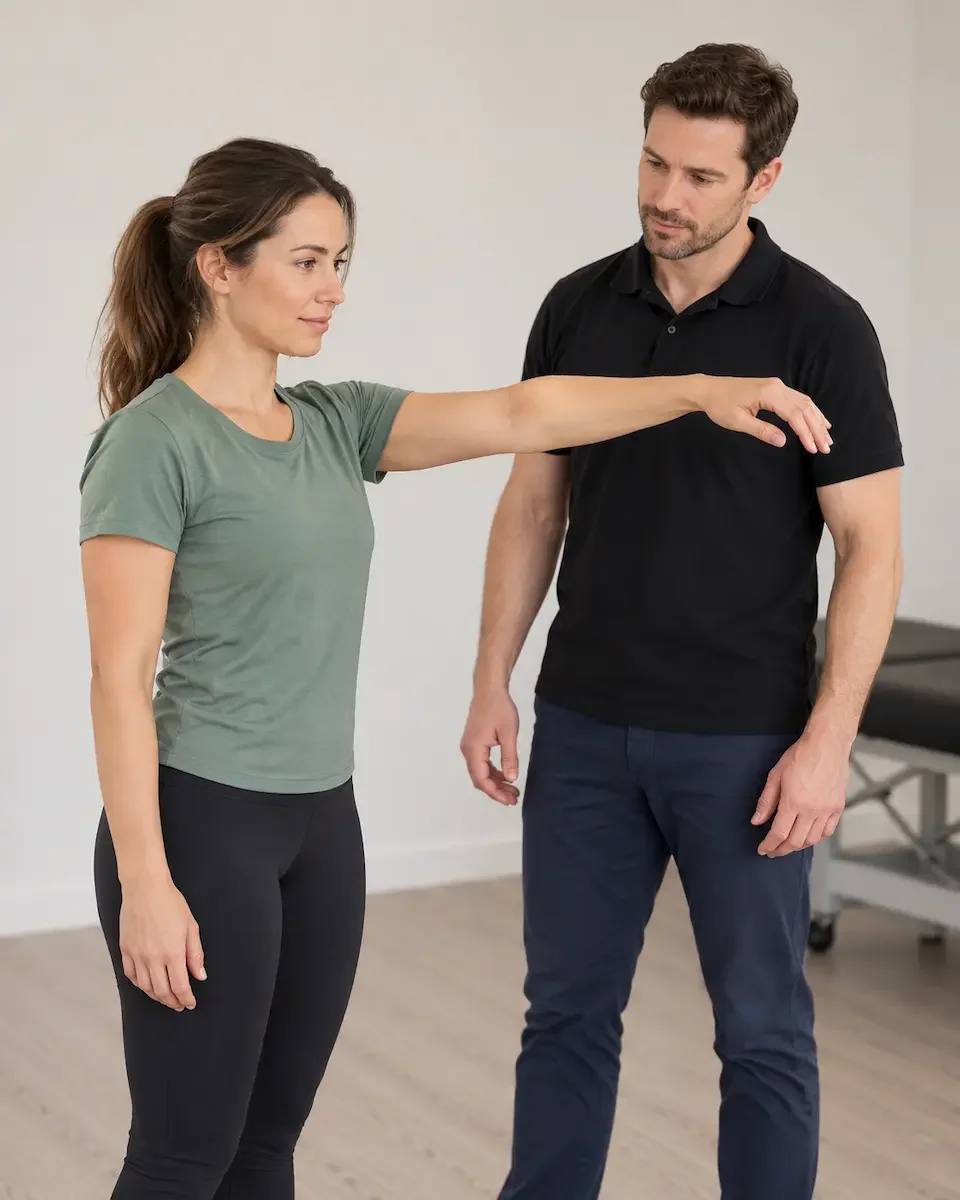
Shoulder and arm pain care built around you
Your goals shape your care. That might mean lifting your child, getting through a workday, returning to the gym or sleeping more comfortably.
We begin by understanding what has changed and how it affects you. We explain our findings, discuss your options and agree on manageable next steps.
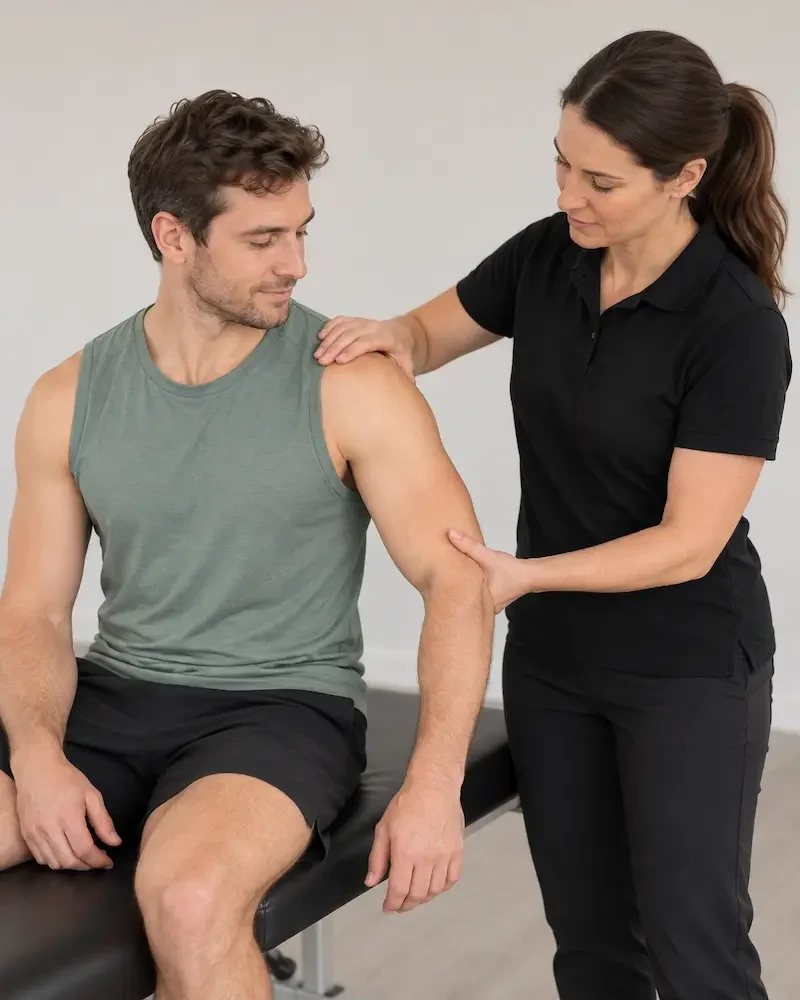
Hands-on treatment is part of our approach, alongside movement practice and progressive strengthening. The balance depends on your presentation, preferences and response to care.
If your symptoms need medical investigation or another type of support, we will explain why and recommend an appropriate referral.
Understanding shoulder and arm pain
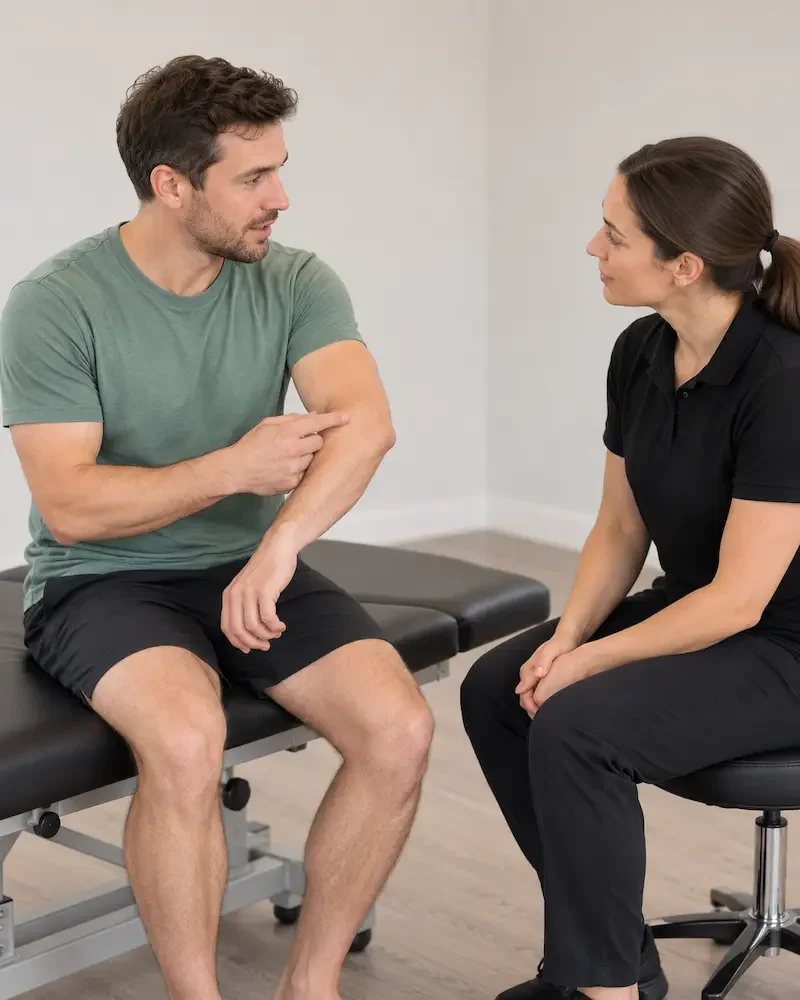
Shoulder and arm pain describes a group of symptoms rather than a single diagnosis. Muscles, tendons, joints and nerves can all be involved. Pain in the upper arm may come from the shoulder, while symptoms that travel farther down the arm may relate to the neck or a peripheral nerve. [1,9,10]
Pain location provides useful information, but it does not tell the whole story. We consider how symptoms started, which activities affect them and what we find during assessment.
You do not need to know the diagnosis before your appointment.
How we assess your shoulder and arm pain
We start with your history, concerns and goals. Your assessment may include:
discussing any injury, recent changes in activity and previous episodes
exploring the effect on work, sleep, sport and everyday tasks
assessing shoulder, elbow, wrist and neck movement where relevant
checking strength, grip and movements such as reaching or lifting
testing sensation, reflexes and muscle strength when nerve involvement is suspected
reviewing existing scans, reports or medical advice.
We explain what the assessment suggests, including any uncertainty, before discussing treatment. You can ask questions or pause the examination at any time.
Our approach: Reset. Retrain. Reload.
The three Rs describe how we organise your care. They often overlap, and the balance changes as your needs change.
Reset — Settle symptoms and support movement
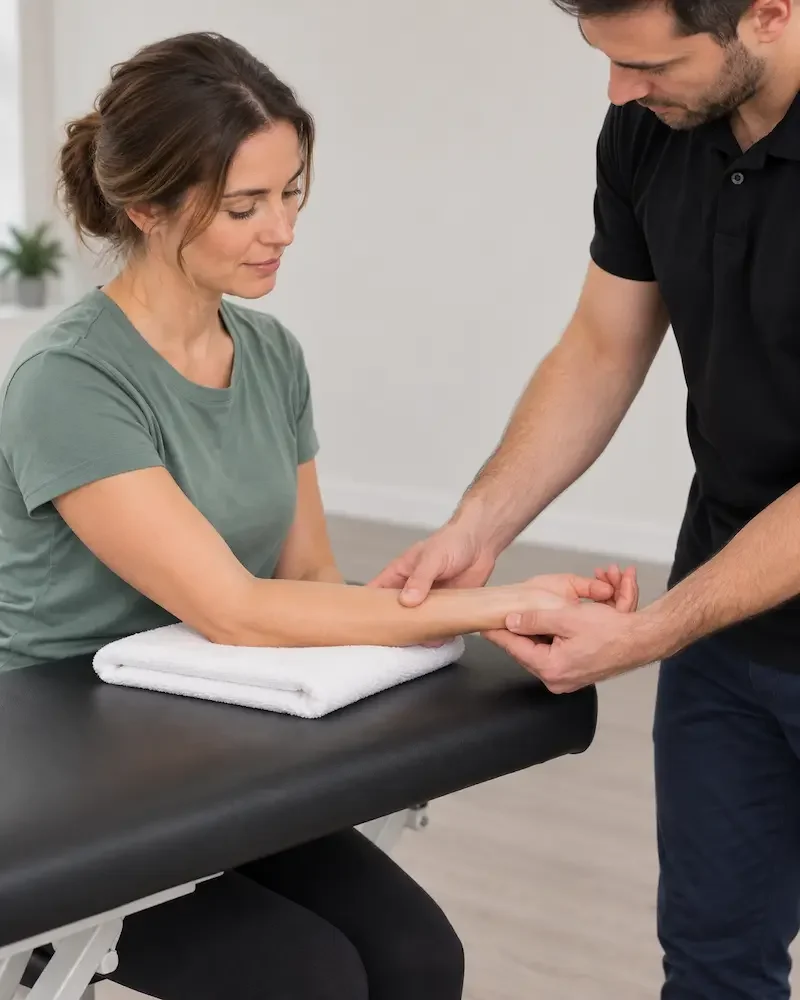
Hands-on care is part of the Reset phase. Depending on your assessment, this may include soft-tissue techniques and joint mobilisation to reduce discomfort and make movement more manageable.
We also discuss practical adjustments to activities that are currently difficult. We explain the proposed treatment, relevant risks and alternatives, and check that you are comfortable proceeding.
Retrain — Build movement control and confidence
Retrain focuses on exercise and movement practice.
Your programme might involve reaching, rotating your arm, controlling a lift or practising a comfortable grip. We choose movements that match your goals and adjust their range, resistance, or difficulty to suit your starting point.
The aim is to help you feel more capable using your arm in everyday situations.
Reload — Build strength and capacity
Reload develops the strength and endurance needed for work, family life, training or sport.
Depending on your goals, this may include progressive shoulder strengthening, pulling and pushing exercises, grip work, carrying or preparation for overhead activities.
We review your response and adjust the demands over time. Progress might mean carrying more, working longer or returning to an activity with greater confidence.
Common presentations and diagnoses
These descriptions explain some common terms. Symptoms can overlap, and an individual assessment helps determine appropriate management options.
-
The rotator cuff is a group of muscles and tendons that helps move and support the shoulder. Problems in this region may cause pain with reaching, lifting or lying on the affected side. You may hear terms such as tendinopathy, subacromial pain or bursitis. [1,2]
Management commonly includes education and exercise, with hands-on treatment as an option for short-term pain relief. A significant injury or marked weakness may require further investigation. [2]
-
Frozen shoulder, also called adhesive capsulitis, causes shoulder pain and substantial stiffness. Everyday tasks such as dressing or reaching behind your back may become difficult. [3]
Care is matched to your symptoms and movement tolerance. It may include hands-on mobilisation and range-of-motion exercises, alongside discussion with your GP about other options, including injections where appropriate. Recovery varies, so we review progress rather than promise a fixed timeframe. [3]
-
Arthritis can affect the main shoulder joint or the acromioclavicular—or AC—joint at the top of the shoulder. Symptoms may include pain, stiffness and difficulty using the arm. [4]
Management may involve activity adjustments and exercises to support movement and strength. We focus on your comfort and function; treatment does not reverse arthritic changes. Medical review may be appropriate when symptoms substantially limit daily life. [4]
-
An unstable shoulder may feel as though it slips, gives way or cannot be trusted in certain positions. This can follow a dislocation or occur in people with greater joint laxity. [5]
After appropriate assessment, rehabilitation often focuses on shoulder control and strengthening. Repeated dislocations or ongoing instability may need specialist review. A suspected current dislocation requires urgent medical care. [5]
-
Tennis elbow usually affects the outside of the elbow; golfer’s elbow affects the inside. Symptoms may be aggravated by gripping, lifting, using tools or repeated wrist movements. You do not need to play either sport to develop these problems. [6,7]
We assess the activities involved and discuss changes to their demands. Care may include hands-on treatment and progressive forearm and grip exercises, with progress reviewed against the tasks you need to perform.
-
Tendon problems around the wrist can make gripping, lifting and twisting uncomfortable. One example is de Quervain’s tenosynovitis, which affects tendons on the thumb side of the wrist and can cause pain into the forearm. [8]
We discuss ways to modify aggravating tasks and whether rehabilitation is appropriate. Some presentations also benefit from splinting or medical treatment, so referral may form part of the plan. [8]
-
Carpal tunnel syndrome involves pressure on the median nerve at the wrist. It can cause tingling, numbness or pain in the hand, often affecting the thumb, index and middle fingers. Some people also notice weakness or difficulty gripping. [10]
Management depends on the severity and duration of symptoms. Activity changes or a night splint may be appropriate, while persistent numbness or weakness can require medical or specialist assessment. Hands-on care is not a substitute for investigating progressive nerve symptoms. [10]
-
Irritation of a nerve in the neck can cause pain into the shoulder or arm, sometimes with tingling, numbness or weakness. This is often called cervical radiculopathy. [9]
Assessment includes checking for nerve involvement and deciding whether conservative care or medical review is appropriate. New or worsening weakness needs prompt assessment.
Read more about neck-related symptoms on our neck pain page.

What does the research say?
Research helps guide how we combine hands-on care, exercise and advice. The most useful evidence relates to your particular condition, not simply where you feel pain.
Exercise for shoulder pain
The 2025 rotator cuff tendinopathy guideline recommends active rehabilitation, which may include movement-control exercises and resistance training. [2]
The GRASP trial also found that, for the rotator cuff presentations studied, a longer supervised exercise programme did not produce better average outcomes over 12 months than a high-quality advice session that included a home exercise programme. [11]
At LBBS, we use these findings to support a practical approach: clear instructions, suitable exercises and a level of supervision matched to your needs.
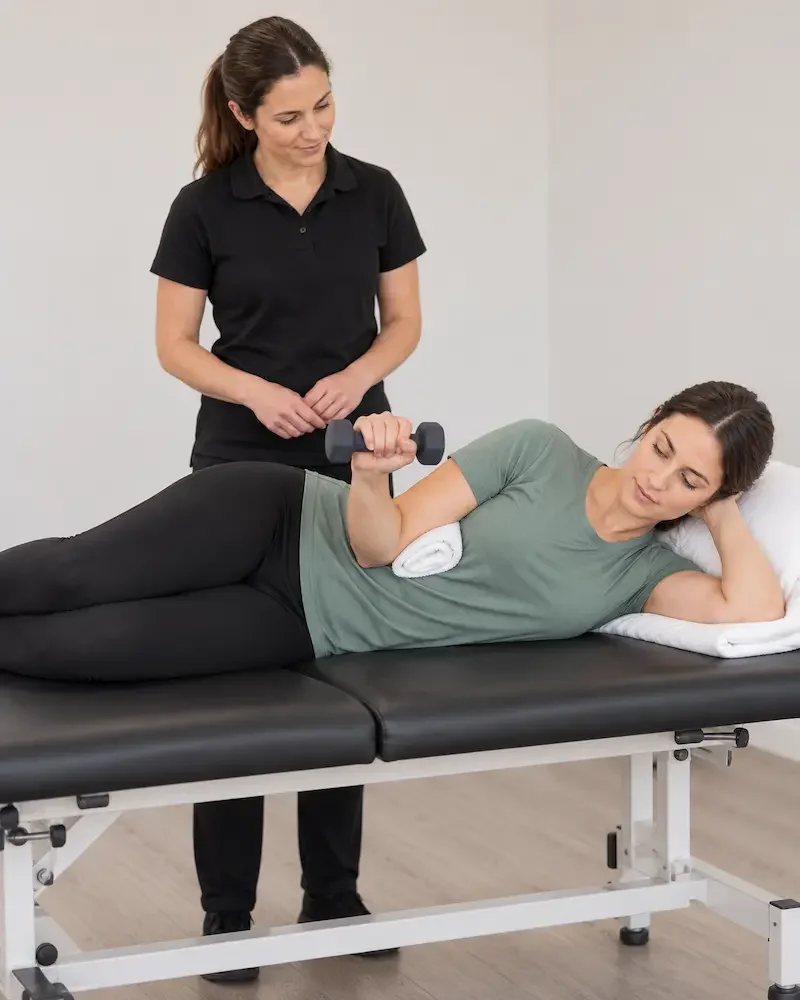
Hands-on treatment for pain and movement
Hands-on care can help manage selected shoulder conditions. The 2025 rotator cuff guideline supports manual therapy as an option for short-term pain relief, including when used alongside exercise. [2]
For frozen shoulder, a 2025 guideline also supports considering manual therapy with range-of-motion exercises to improve movement and function, although the supporting evidence is of low certainty. [3]
These findings inform our Reset approach. We review whether treatment is making a meaningful difference in your comfort and movement while continuing appropriate rehabilitation.
What about elbow pain?
A 2024 Cochrane review found that manual therapy, prescribed exercise or both may slightly improve tennis elbow pain and disability compared with minimal treatment at the end of treatment. The evidence was of low certainty, and benefits were not sustained at later follow-up. [6]
This supports setting realistic expectations and reviewing your response. We consider whether care is helping you grip, lift and manage daily demands, and adjust the plan when needed.
Bringing treatment and rehabilitation together
At LBBS, hands-on treatment and exercise have complementary roles in your care plan. We aim to help you manage current symptoms while developing the movement confidence and physical capacity needed for your goals.
We draw on relevant research across musculoskeletal healthcare, including physiotherapy and other manual-therapy settings. We consider the treatment studied, the condition and the people involved when applying those findings.
Research on rotator cuff pain does not automatically establish effectiveness for frozen shoulder, wrist pain or nerve compression. Your assessment and response remain central to decisions.
When to seek medical help
Some symptoms need medical assessment rather than a routine osteopathy appointment.
Seek emergency help
Call 000 if shoulder or arm pain occurs with chest discomfort, breathlessness, sweating, nausea or feeling faint, particularly if a heart attack is possible. A heart attack can occur without obvious chest pain. [12]
Seek urgent medical assessment after a significant injury if your shoulder looks deformed, a dislocation is suspected or you cannot use the arm. [1,5]
Arrange prompt medical review
Seek prompt medical advice for:
new or worsening arm or hand weakness
persistent or increasing numbness
a hot, swollen joint with fever or feeling unwell
severe or rapidly worsening pain
symptoms that are not improving or are increasingly limiting daily life. [1,9,10]
This list is not exhaustive. If you are unsure how urgently you need help, call Healthdirect on 1800 022 222.
Frequently Asked Questions
-
Not necessarily. Many presentations can be assessed initially through your history and examination. Imaging may be appropriate after an injury, when a specific problem is suspected or when symptoms are not progressing as expected. [1]
Bring any existing reports so we can consider them alongside your symptoms.
-
Hands-on treatment is part of our approach and may be included when appropriate for your presentation and preferences.
We explain the proposed techniques and discuss them with you first. Your plan may also include advice and exercises to practise between appointments.
-
This depends on your symptoms and diagnosis. We can help you decide which activities to continue, modify or temporarily pause.
Adjustments might involve changing the weight, range of movement, repetition count or time spent on a task. Advice is tailored to your assessment, particularly if there has been a recent injury or you have nerve symptoms.
-
There is no preset course of treatment. We discuss a plan after assessment and review it against your goals and response.
If you are not making useful progress, we reconsider the approach and whether further investigation or another service would be more appropriate.
-
Both Dr Rosalind Hill and Dr Joshua Saxton provide general musculoskeletal osteopathic care. Josh is also an Accredited Exercise Physiologist.
Visit our practitioner profiles and booking page to check availability. Contact us if you are unsure who to book with.
Shoulder and arm pain appointments in Norwood
You do not need to have everything figured out before asking for help.
Live Better Be Stronger practitioners consult at Bounce Back Osteopathy in Norwood, Adelaide. Your appointment is an opportunity to discuss your symptoms, assess what is happening and agree on suitable next steps.
References
Healthdirect Australia. Shoulder pain.
Desmeules F, et al. Rotator Cuff Tendinopathy Diagnosis, Nonsurgical Medical Care, and Rehabilitation: A Clinical Practice Guideline. Journal of Orthopaedic & Sports Physical Therapy. 2025;55(4):235–274.
Lee BC, et al. Clinical Practice Guidelines for Diagnosis and Non-Surgical Treatment of Primary Frozen Shoulder. Annals of Rehabilitation Medicine. 2025;49(3):113–138.
American Academy of Orthopaedic Surgeons. Arthritis of the Shoulder. OrthoInfo.
American Academy of Orthopaedic Surgeons. Chronic Shoulder Instability and Dislocation. OrthoInfo.
Wallis JA, et al. Manual therapy and exercise for lateral elbow pain. Cochrane Database of Systematic Reviews. 2024;5.
American Academy of Orthopaedic Surgeons. Medial Epicondylitis (Golfer’s Elbow). OrthoInfo.
American Academy of Orthopaedic Surgeons. De Quervain’s Tenosynovitis. OrthoInfo.
NHS inform. Cervical radiculopathy.
American Academy of Orthopaedic Surgeons. Carpal Tunnel Syndrome. OrthoInfo.
Hopewell S, et al. Progressive exercise compared with best practice advice, with or without corticosteroid injection, for the treatment of patients with rotator cuff disorders (GRASP): a multicentre, pragmatic, 2 × 2 factorial, randomised controlled trial. The Lancet. 2021;398:416–428.
Healthdirect Australia. Heart attack.
This information is general and does not replace an individual assessment. Management options depend on your symptoms, medical history and examination.