
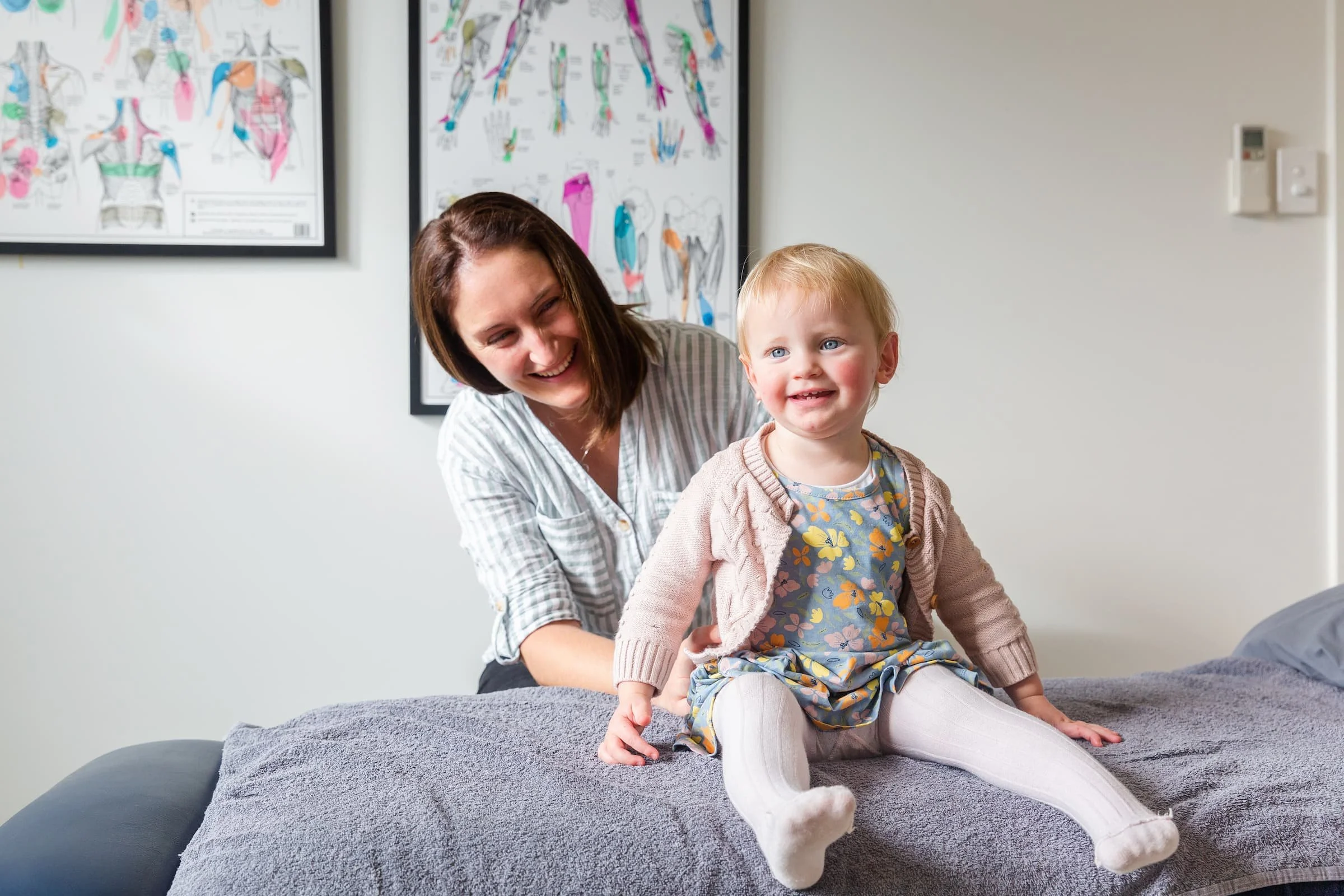
Paediatric Osteopathy in Adelaide
Thoughtful, age-appropriate musculoskeletal assessment and osteopathic care for babies, children and adolescents.
Dr Rosalind Hill provides individualised care for concerns involving movement, comfort, musculoskeletal pain or recovery from injury.
Appointments are adapted to your child’s age, communication, comfort and individual needs. Treatment is only recommended when clinically appropriate and with parent or guardian consent.
Appointments available in Norwood and Unley.
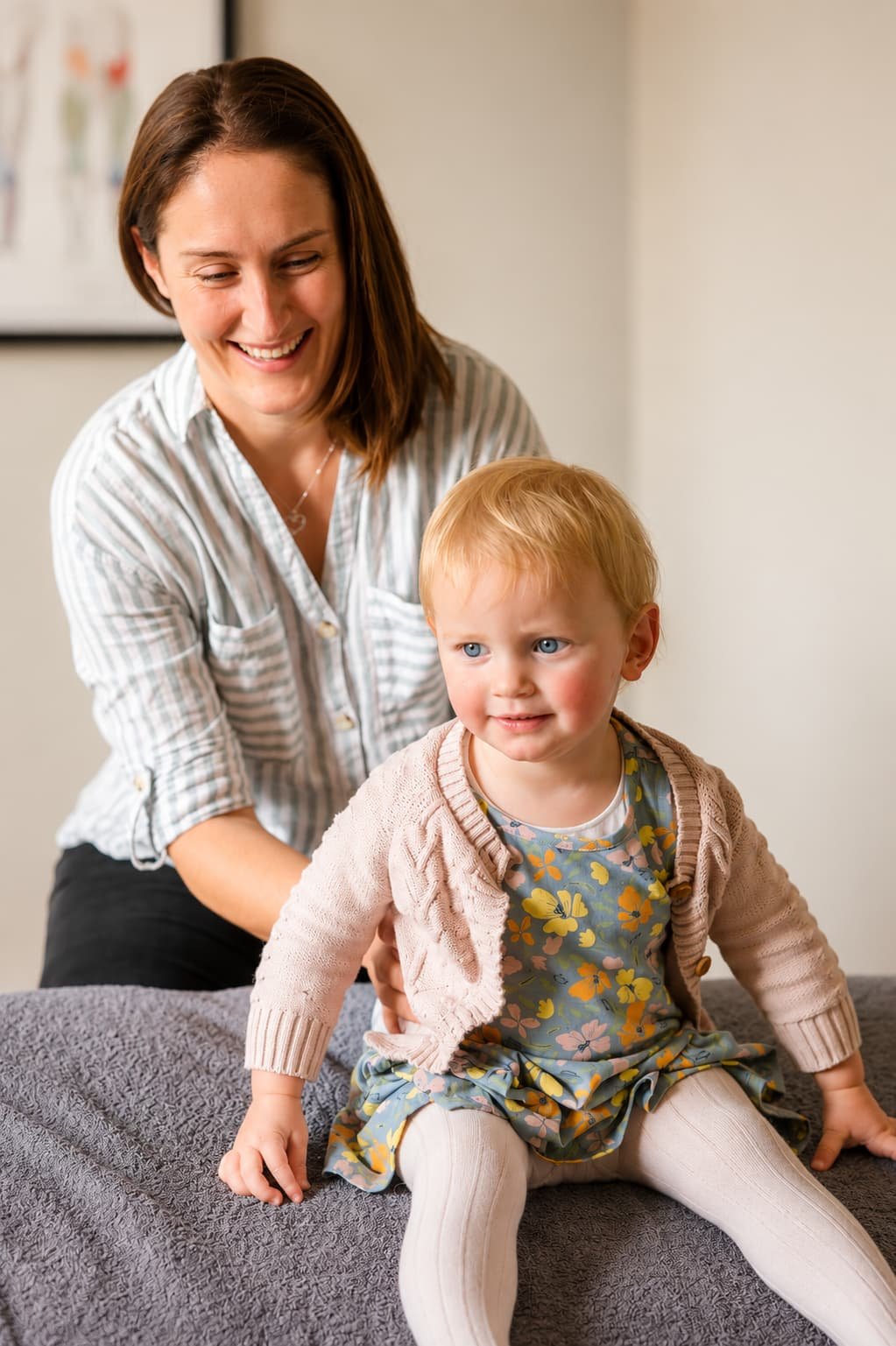
Meet Dr Rosalind Hill
Dr Rosalind Hill is an Adelaide osteopath with a particular interest in musculoskeletal issues affecting babies, children and adolescents, as well as pregnancy-related and postnatal musculoskeletal care.
Roz provides calm, age-appropriate assessment and care in an environment where children and parents are encouraged to ask questions and remain involved throughout the appointment.
Each consultation is adapted to your child’s age, communication, comfort and individual presentation rather than following a standard treatment approach.
Care centred around your child
Paediatric osteopathy involves assessing and managing musculoskeletal concerns in babies, children and adolescents.
An appointment may include:
• discussing your child’s history and current concern
• observing age-appropriate movement and function where relevant
• completing an age-appropriate musculoskeletal assessment
• explaining findings in clear language
• discussing advice, education and management options
• gentle hands-on treatment where clinically appropriate and with consent
Not every appointment includes hands-on treatment. Depending on the assessment, the most appropriate next step may be education, movement advice, monitoring or referral to another healthcare professional.
What is Paediatric Osteopathy
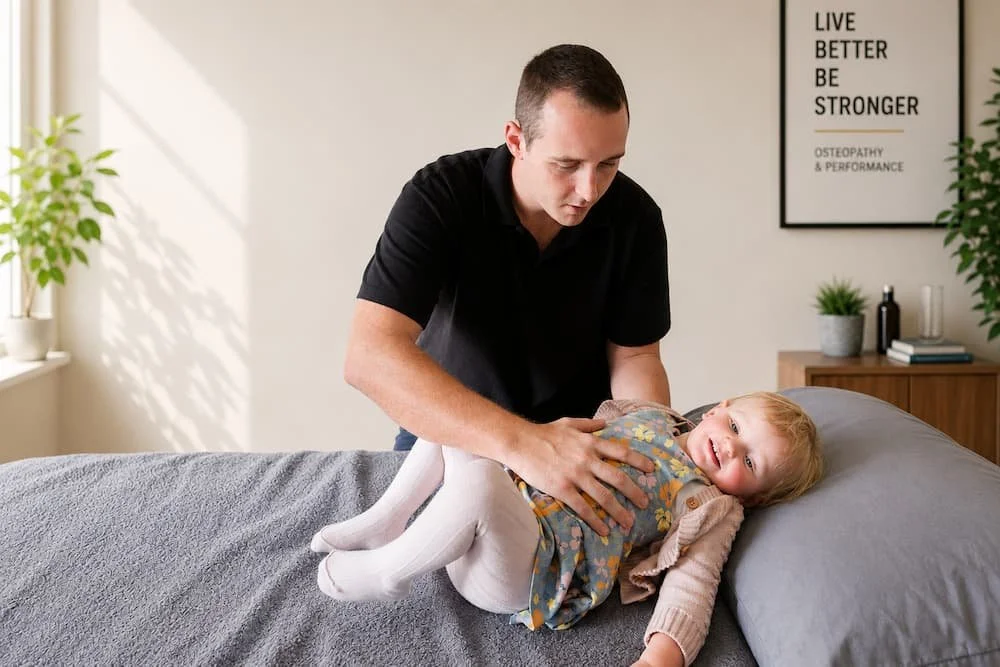
Paediatric Osteopathy Across Different Ages
Babies & Infants
Appointments are arranged around your baby’s comfort and routine where possible.
Assessment may involve observing posture, movement and comfort while your baby is held, lying down or interacting naturally with you. Parents remain involved throughout the appointment.
Children
Appointments become more interactive as children grow.
Assessment may include movement, balance, coordination, posture and everyday activities relevant to the presenting concern. Each step is explained in language appropriate for both the child and parent.
Why Families May Seek an Assessment
Families may arrange an osteopathic assessment when a baby, child or adolescent has musculoskeletal pain, discomfort, movement restriction or is recovering from an injury.
Examples may include:
• musculoskeletal pain or discomfort
• persistent preference for turning or moving one way where a musculoskeletal concern is suspected
• recovery following a minor injury
• sport or activity-related pain
• neck, back or shoulder discomfort
• headaches associated with musculoskeletal factors
• posture or movement concerns
Adolescents
Adolescents may present with musculoskeletal concerns associated with sport, growth, study or everyday activities.
Where appropriate, they are encouraged to participate in discussions about their assessment, goals and management while parents or guardians remain involved in consent and decision-making.
What Happens During Your Appointment?
Your Role During the Appointment
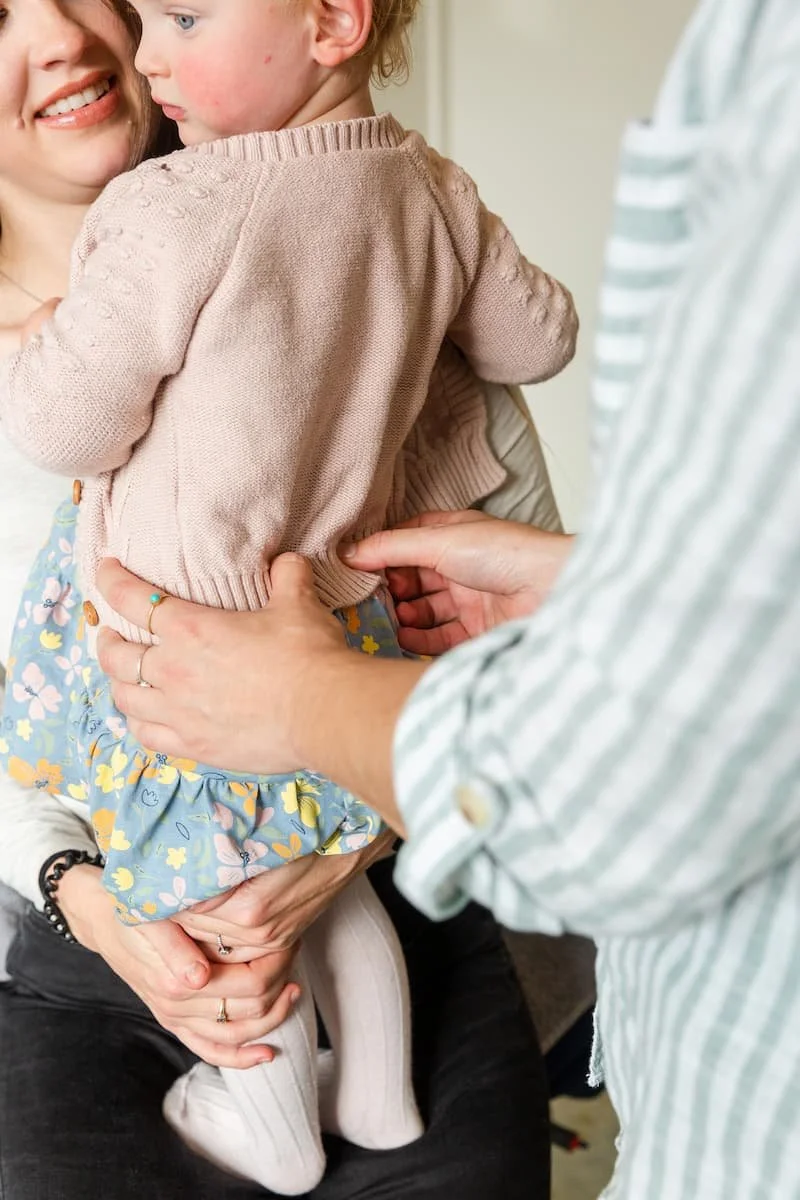
A parent or legal guardian should attend the consultation and provide consent where required.
You are welcome to hold or comfort your child, feed or settle your baby, ask questions or pause the appointment if your child needs a break.
Helpful items may include relevant scans or reports, referral letters, your child’s health record or Blue Book, a medication list, comfortable clothing and a favourite comfort item.
Don’t worry if you do not have everything—just bring what you have.
Before We Begin
We begin by discussing your concerns, your child’s medical history and any information relevant to the presenting problem.
For babies, this may include pregnancy, birth history, and early development, as relevant to the musculoskeletal concern.
Assessment
Assessment is adapted to your child’s age and may include observation, movement assessment and an age-appropriate musculoskeletal examination.
Parents remain involved, and older children and adolescents are encouraged to participate in discussions where appropriate.
Management Plan
Roz will explain her findings and discuss the available management options.
Depending on your child’s needs, this may include education, movement advice, exercises, activity modification, gentle hands-on treatment, monitoring or referral to another healthcare professional.
Working With Your Healthcare Team
Osteopathy may be one part of your child’s broader healthcare.
With your consent, Roz can communicate with your child’s GP, paediatrician or other treating professionals where coordinated care is appropriate.
If further medical assessment or another type of healthcare is required, Roz will explain why and recommend the most appropriate next step.
Gentle, Age-Appropriate Care
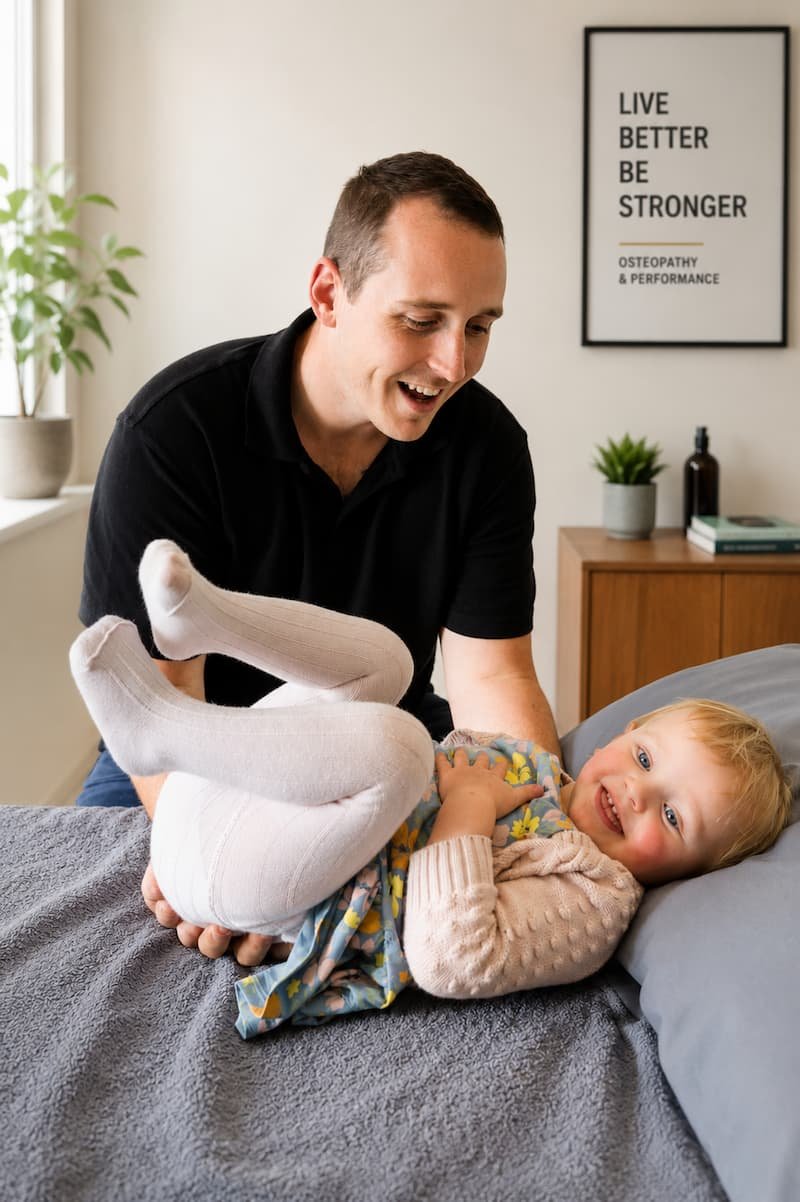
Your child’s comfort and willingness to participate guide the appointment. Treatment is never forced.
Depending on the assessment, care may involve education, movement advice, exercises, gentle manual techniques, monitoring or referral. Some initial appointments may not include hands-on treatment.
Which Appointment Should I Book?
Initial Paediatric Osteopathy Appointment
For babies, children and adolescents attending their first paediatric appointment or returning with a new concern.
Standard Osteopathy Appointment
– 30 Minutes
For returning paediatric patients continuing care for a concern that has already been assessed.
Extended Osteopathy Appointment
– 45 Minutes
For returning patients who would benefit from additional assessment, discussion or management time.
Frequently Asked Questions
-
No. Most families book directly without a referral. If another healthcare professional has referred your child, you're welcome to bring any relevant information to your appointment.
-
Not necessarily. Some appointments focus on assessment, explanation and planning before any treatment is recommended.
-
Yes. A parent or legal guardian should attend the appointment and is encouraged to remain involved throughout the consultation.
-
Comfortable clothing that allows easy movement is ideal.
-
Yes, you can bring siblings.
-
Yes. With your consent, Roz can communicate with other healthcare professionals involved in your child's care where appropriate.
Looking for thoughtful, age-appropriate osteopathic care for your child?
Whether your child is a newborn, a toddler, a school-aged child or a teenager, Dr Rosalind Hill provides osteopathic assessment and care tailored to their individual needs.
Paediatric Osteopathy Appointments in Norwood and Unley.
Dr Rosalind Hill provides paediatric osteopathy appointments from established clinic locations in Norwood and Unley.
Choose your preferred clinic and appointment type when booking online.